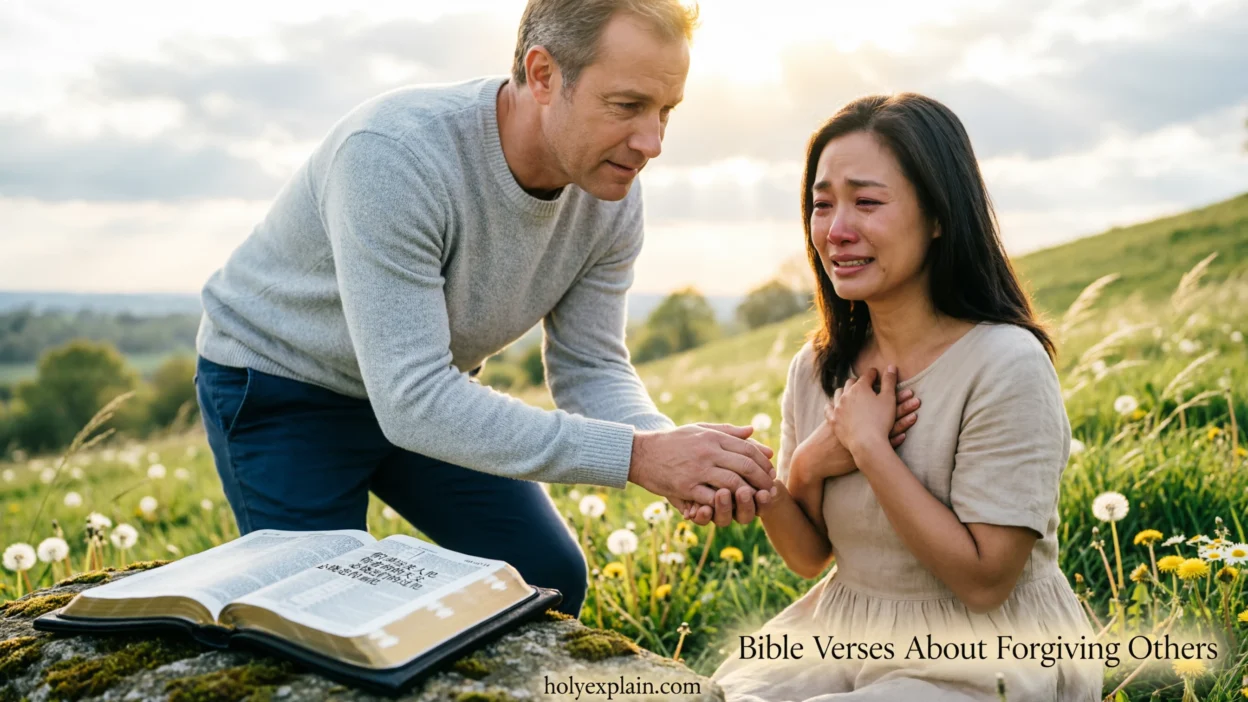
Forgiveness is one of the most important themes found throughout the Bible.
If someone has hurt us deeply or caused a minor offense, God calls His people to forgive as He has forgiven them.
Learning to forgive others can be challenging, but it brings healing, freedom, and peace to our hearts.
The Bible teaches that forgiveness is not just a suggestion—it is a reflection of God’s love and mercy.
By studying Bible verses about forgiving others, believers can better understand how to release bitterness, restore relationships, and grow spiritually.
These scriptures provide wisdom, encouragement, and practical guidance for anyone struggling with forgiveness.
1. Ephesians 4:32
Verse: “Be kind and compassionate to one another, forgiving each other, just as in Christ God forgave you.”
Meaning: This verse reminds believers that God’s forgiveness should be the model for how they treat others. Since God freely forgives us, we are called to extend the same grace to people around us.
Lesson: Remember God’s mercy when you find it difficult to forgive.
2. Matthew 6:14
Verse: “For if you forgive other people when they sin against you, your heavenly Father will also forgive you.”
Meaning: Jesus highlights the connection between receiving and giving forgiveness. A forgiving heart demonstrates genuine faith and obedience to God.
Lesson: Practice forgiveness as an expression of your relationship with God.
3. Colossians 3:13
Verse: “Bear with each other and forgive one another if any of you has a grievance against someone.”
Meaning: Relationships are imperfect, and conflicts are inevitable. This verse encourages patience and forgiveness rather than holding grudges.
Lesson: Choose grace over resentment.
4. Luke 6:37
Verse: “Forgive, and you will be forgiven.”
Meaning: Jesus teaches that mercy should characterize the lives of His followers. Forgiveness creates an atmosphere of compassion and understanding.
Lesson: Let forgiveness become a daily habit.
5. Mark 11:25
Verse: “And when you stand praying, if you hold anything against anyone, forgive them.”
Meaning: Unforgiveness can hinder spiritual growth and fellowship with God. Jesus urges believers to release offenses before approaching Him in prayer.
Lesson: Examine your heart regularly for bitterness.
6. Matthew 18:21-22
Verse: “I tell you, not seven times, but seventy-seven times.”
Meaning: Peter asked how often he should forgive, and Jesus emphasized limitless forgiveness. Forgiveness should not be counted or restricted.
Lesson: Forgive repeatedly without keeping score.
7. Romans 12:19
Verse: “Do not take revenge, my dear friends, but leave room for God’s wrath.”
Meaning: God is the ultimate judge. Instead of seeking revenge, believers are encouraged to trust God with justice.
Lesson: Leave vengeance in God’s hands.
8. Proverbs 17:9
Verse: “Whoever would foster love covers over an offense.”
Meaning: Love seeks restoration rather than constantly reopening old wounds. Forgiveness helps relationships grow stronger.
Lesson: Focus on healing rather than reliving hurt.
9. Matthew 5:44
Verse: “Love your enemies and pray for those who persecute you.”
Meaning: Forgiveness extends even to those who oppose or mistreat us. Prayer helps soften our hearts toward difficult people.
Lesson: Pray for those who have hurt you.
10. Psalm 103:12
Verse: “As far as the east is from the west, so far has he removed our transgressions from us.”
Meaning: God’s forgiveness is complete and thorough. This serves as an example of how we should release offenses.
Lesson: Let go of past wrongs completely.
11. 1 John 1:9
Verse: “He is faithful and just and will forgive us our sins.”
Meaning: God’s faithfulness ensures that sincere repentance is met with forgiveness. His example inspires us to forgive others.
Lesson: Reflect God’s faithfulness through forgiveness.
12. Isaiah 1:18
Verse: “Though your sins are like scarlet, they shall be as white as snow.”
Meaning: God’s forgiveness brings cleansing and renewal. No sin is beyond His ability to forgive.
Lesson: Trust in God’s power to restore.
13. Micah 7:18
Verse: “Who is a God like you, who pardons sin and forgives?”
Meaning: God’s forgiving nature sets Him apart. His mercy demonstrates the depth of His love.
Lesson: Make mercy part of your character.
14. Luke 23:34
Verse: “Father, forgive them, for they do not know what they are doing.”
Meaning: Even while suffering on the cross, Jesus chose forgiveness. His example reveals extraordinary compassion.
Lesson: Forgive even when the pain is deep.
15. Acts 7:60
Verse: “Lord, do not hold this sin against them.”
Meaning: Stephen forgave his persecutors during his final moments. His response reflected Christ-like faith and love.
Lesson: Respond to hostility with grace.
16. James 5:16
Verse: “Confess your sins to each other and pray for each other.”
Meaning: Honest relationships encourage healing and forgiveness. Prayer strengthens reconciliation.
Lesson: Seek restoration through openness.
17. Proverbs 10:12
Verse: “Love covers over all wrongs.”
Meaning: Genuine love does not ignore problems but chooses forgiveness over bitterness. Love seeks peace and unity.
Lesson: Let love guide your response.
18. Matthew 5:7
Verse: “Blessed are the merciful, for they will be shown mercy.”
Meaning: Mercy and forgiveness are closely connected. Those who show compassion often experience God’s blessings.
Lesson: Be quick to extend mercy.
19. Romans 5:8
Verse: “While we were still sinners, Christ died for us.”
Meaning: Christ offered forgiveness before we deserved it. His sacrifice demonstrates unconditional love.
Lesson: Forgive even when it is undeserved.
20. Psalm 86:5
Verse: “You, Lord, are forgiving and good.”
Meaning: God’s goodness is displayed through His willingness to forgive. Believers should imitate this characteristic.
Lesson: Let goodness influence your actions.
21. Hebrews 8:12
Verse: “I will remember their sins no more.”
Meaning: God chooses not to hold forgiven sins against His people. This illustrates complete forgiveness.
Lesson: Stop revisiting forgiven offenses.
22. Matthew 18:35
Verse: “Forgive your brother or sister from your heart.”
Meaning: True forgiveness is sincere and heartfelt, not merely outward behavior. God desires genuine reconciliation.
Lesson: Forgive with sincerity.
23. Romans 12:21
Verse: “Do not be overcome by evil, but overcome evil with good.”
Meaning: Forgiveness breaks the cycle of hatred and retaliation. Goodness has the power to transform situations.
Lesson: Respond positively to negativity.
24. Galatians 5:22-23
Verse: “The fruit of the Spirit is love, joy, peace, patience, kindness…”
Meaning: Forgiveness reflects the fruit of a Spirit-led life. It grows naturally as believers mature spiritually.
Lesson: Allow the Holy Spirit to shape your heart.
25. 1 Peter 4:8
Verse: “Love each other deeply, because love covers over a multitude of sins.”
Meaning: Deep love promotes understanding and forgiveness. Strong relationships thrive when grace is present.
Lesson: Choose love during conflict.
26. Ecclesiastes 7:21-22
Verse: “Do not pay attention to every word people say.”
Meaning: Not every offense deserves a strong reaction. Sometimes wisdom involves overlooking minor mistakes.
Lesson: Learn to let small offenses go.
27. Psalm 130:3-4
Verse: “But with you there is forgiveness.”
Meaning: Forgiveness is central to God’s relationship with humanity. His mercy provides hope for all.
Lesson: Embrace the hope found in forgiveness.
28. John 8:11
Verse: “Neither do I condemn you.”
Meaning: Jesus showed compassion while encouraging a transformed life. Forgiveness opens the door to growth and change.
Lesson: Extend grace while encouraging truth.
29. 2 Chronicles 7:14
Verse: “I will hear from heaven, and I will forgive their sin.”
Meaning: God responds to humility and repentance with forgiveness. His mercy is available to those who seek Him.
Lesson: Approach God with a humble heart.
30. Isaiah 43:25
Verse: “I, even I, am he who blots out your transgressions.”
Meaning: God willingly removes sin because of His love and grace. His forgiveness brings a fresh start.
Lesson: Celebrate the freedom found in God’s forgiveness.
FAQ:
1. Why is forgiveness important according to the Bible?
Forgiveness reflects God’s character and helps believers maintain healthy relationships. It also frees people from bitterness and emotional burdens.
2. Does forgiving someone mean trusting them again?
Not necessarily. Forgiveness releases resentment, while trust may need to be rebuilt over time through consistent actions.
3. What did Jesus teach about forgiveness?
Jesus taught believers to forgive repeatedly and sincerely. He emphasized mercy, grace, and reconciliation throughout His ministry.
4. How many times should I forgive someone?
According to Matthew 18:21-22, forgiveness should not be limited by a number. Christians are encouraged to forgive continually.
5. Can God forgive any sin?
Yes. The Bible teaches that God’s forgiveness is available to all who genuinely repent and place their faith in Him.
6. What if forgiving someone feels impossible?
Forgiveness can be difficult, especially after deep hurt. Prayer, reliance on God’s strength, and focusing on His grace can help the process.
7. Is forgiveness the same as forgetting?
No. Forgiveness means releasing the desire for revenge or resentment, while memories may still remain.
8. How does forgiveness benefit mental and spiritual health?
Forgiveness reduces bitterness, promotes peace, and strengthens spiritual growth. It allows believers to move forward with greater freedom and joy.
Final Thoughts
These Bible verses about forgiving others reveal the heart of God and His desire for His people to live in peace, grace, and reconciliation.
Forgiveness is not always easy, but it is one of the most powerful ways to reflect Christ’s love in everyday life.
As you meditate on these scriptures, ask God to help you release past hurts and embrace a forgiving spirit.
Through His strength, you can experience healing, freedom, and deeper relationships with both God and others.